Wool forever
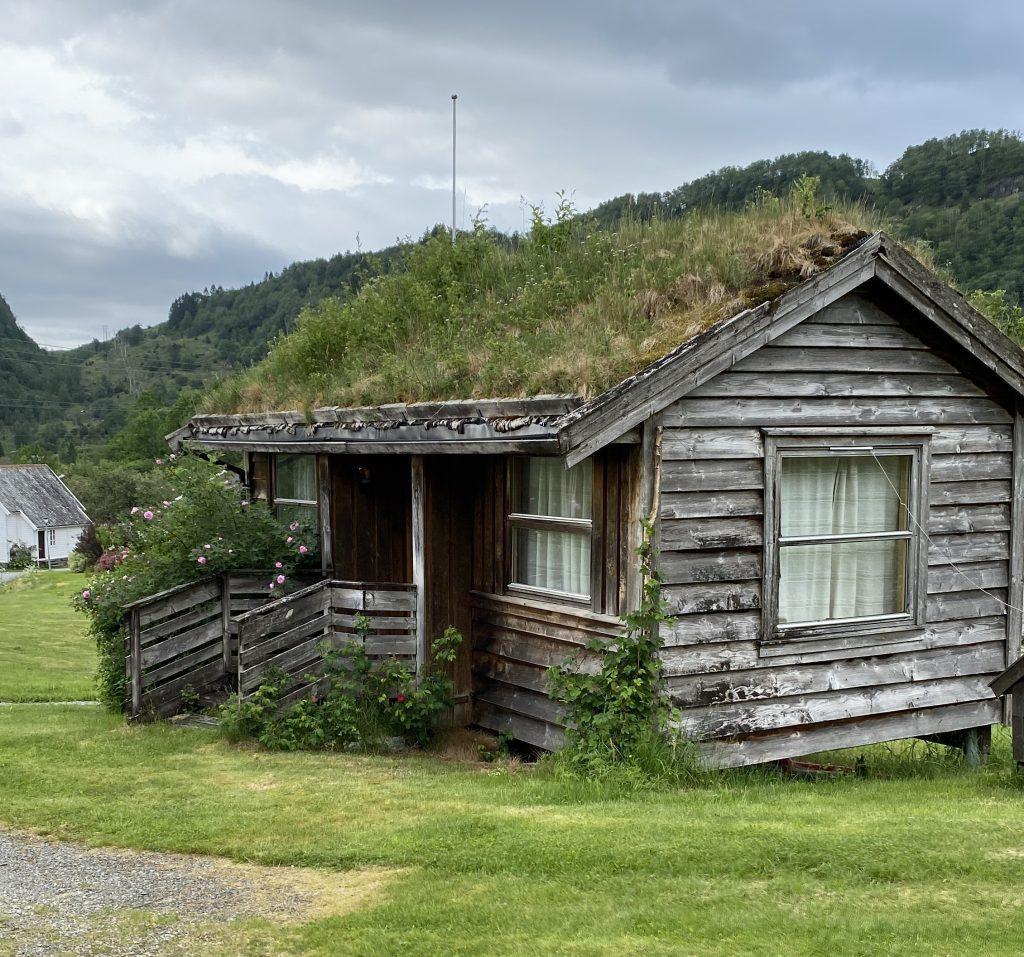
In Norway, there is an organization that helps people find very old houses and breathe new life into them; they can even help with some of the renovation costs. But I am not going to tell you about them, but about the fact that there is a very big chance that if you open the walls of some two hundred year old house, you will find an old woolen sweater or parts of woolen clothes between its logs.
Here, especially in the coastal areas, the weather is damp, the climate is harsh, and the houses are wooden. In the old wooden houses (lafteverk), they used whatever nature gave for insulation, which was mostly moss…
Moss, however, no matter how abundant, dries out over the years and falls apart, and the wind in these areas, believe me, knows how to find a way into every single corner.
This is where wool appears. Of course, not the fine and delicate kind for Sunday clothes, but everything that has been worn for years, patched and patched, until it finally reaches the “construction fund.” With the help of a wooden chisel, people stuffed these woolen pieces into the crevices around the windows and between the logs. In modern eco-construction, this is called a natural breathable membrane or hygroscopic thermal insulation.
But how did they know about this? Where did they learn about the properties of wool? Our ancestors figured out wool simply because they observed how it works in nature.
It all starts long before knitting needles, looms, and house building. Back in the Stone Age, thousands of years before our era, the first sheep did not look at all like they do today—they had a coarse coat, similar to a deer’s, and a very thin, soft undercoat. In the spring, these animals shed their coats, pushing through bushes and briars, leaving rags of wool on the branches.
The human who gathered these remnants noticed something amazing. The birds stole this very same wool to line their nests. Even after harsh spring storms and pouring rains, the eggs and the little chicks in these nests remained dry and warm. Human literally stole the technology of woolen insulation from the birds before even thinking that the animal itself could be domesticated.
When they started using wool for clothing, people discovered the sensation that scientists today call hygroscopicity. They noticed that unlike linen or skins, wool has two faces. Fishermen from coastal areas and shepherds in the mountains quickly realized that when wool gets wet from the fog or sea waves, it doesn’t make you shiver. Quite the opposite – raw wool, full of lanolin (the sheep’s natural fat), repels water droplets from the outside, while from the inside, it traps moisture from the body and releases it without the garment sticking and a person freezing.
They later transferred this knowledge into their homes. They knew that the biggest enemy of a wooden house is the moisture that gets trapped in the walls from cooking, breathing, and heating. If the wool gets wet from condensation or rain, it has the property of absorbing this moisture into its core without damaging the wood. They saw how the wooden logs of the house breathe, absorbing the moisture inside and taking it out. They knew that if they put a material that holds water, the wood would rot. But the wool, once stuffed between the logs, acted as a living membrane. It absorbed the excess moisture, protected the wood from mold, and dried along with the house. They literally dressed their house to save it from the wild weather.
But the connection of wool with the home does not stop there.
To build a life in a place where summer is more of a chimera and the weather changes five times within a single afternoon, gardening is not just a hobby – it is stubbornness and pure sports malice.
And here, quite naturally, wool comes to the rescue again, but this time underground.
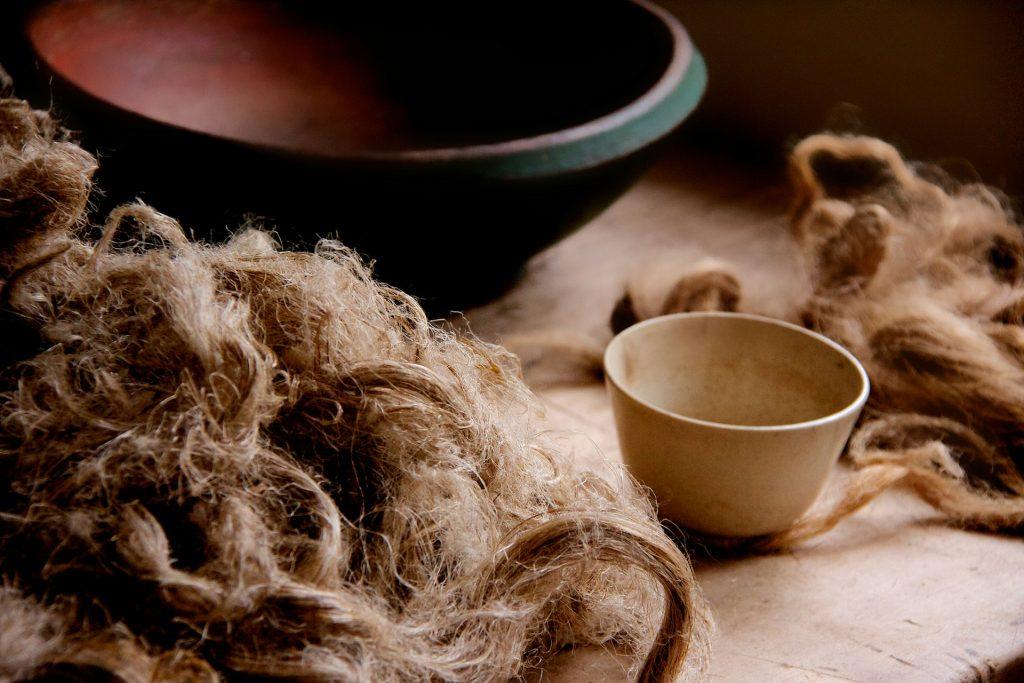
An old practice that is returning today among organic gardeners is burying raw, unwashed wool directly in the garden beds. When you plant tomato or pepper seedlings, a handful of wool at the bottom of the hole works wonders. Wool is made of pure protein (keratin) and in the soil, it begins to decompose very slowly. During this process, it turns into the perfect long-lasting nitrogen fertilizer. But what is more important for our climate is that it acts as an underground sponge – it retains valuable moisture and heat around the roots, making the soil fluffy so they can breathe.
On the surface, on the other hand, coarse wool turns into the best natural barrier against slugs, which are the nightmare of every gardener. The structure of the fiber is dotted with microscopic hooks, and the raw lanolin repels pests instantly. This way, you have a real chance for your salad and strawberries to remain untouched without using a single gram of chemicals.
In conclusion, I can tell you much more about wool. It has long stepped out of the boundaries of an ordinary craft – it is a whole civilization. It is the living, warm thread that connects the history of our ancestors, the comfort in our homes, and help for the fertility of the earth. It is yet another proof that the most ingenious technologies are not born in laboratories, but have already been invented by nature. And in a world overtaken by fast paces and plastic, choosing wool is our conscious slowing down of the pace and help to nature.
Wool, however, is not just one general concept. It is a vast universe of different breeds, textures, raw northern character, and softness. But about how the way a single thread is spun can completely change the life of your favorite sweater, and how to care for these textile treasures so they remain for generations – I will tell you in the next topics.
Until then—take your woolen things out into the fresh air and leave them. They know what to do.