Unspun
A story of yarn and grounding
I’m torn between knitting, the urge to write, and, at the same time, an absolute need to do nothing at all. It’s been this way for over a year now. There was a stretch when just the thought of having to get up and go to work would send me into panic attacks, and now I’m starting to feel a different, quieter fear creeping in — that I’ll never be “normal” again, that I’ll never manage to go back to work, that I’ll stay this shadow of myself forever.
A lot has happened inside me over this past year, but on the outside, aside from two or three extra kilos and a handful of knitted sweaters and cardigans, there’s little else to show for it.
A month ago I picked up unspun wool — Forgarn by Hillesvåg Ullvarefabrikk — for the first time. It’s a challenge. This yarn, I swear, knows exactly what mood you’re in. The slightest flash of irritation, one too-sharp tug, and it simply falls apart in your hands. Knitting with this yarn while anxious thoughts are running through your head can bring you to tears.
Knitting with Forgarn is a form of therapy all on its own.
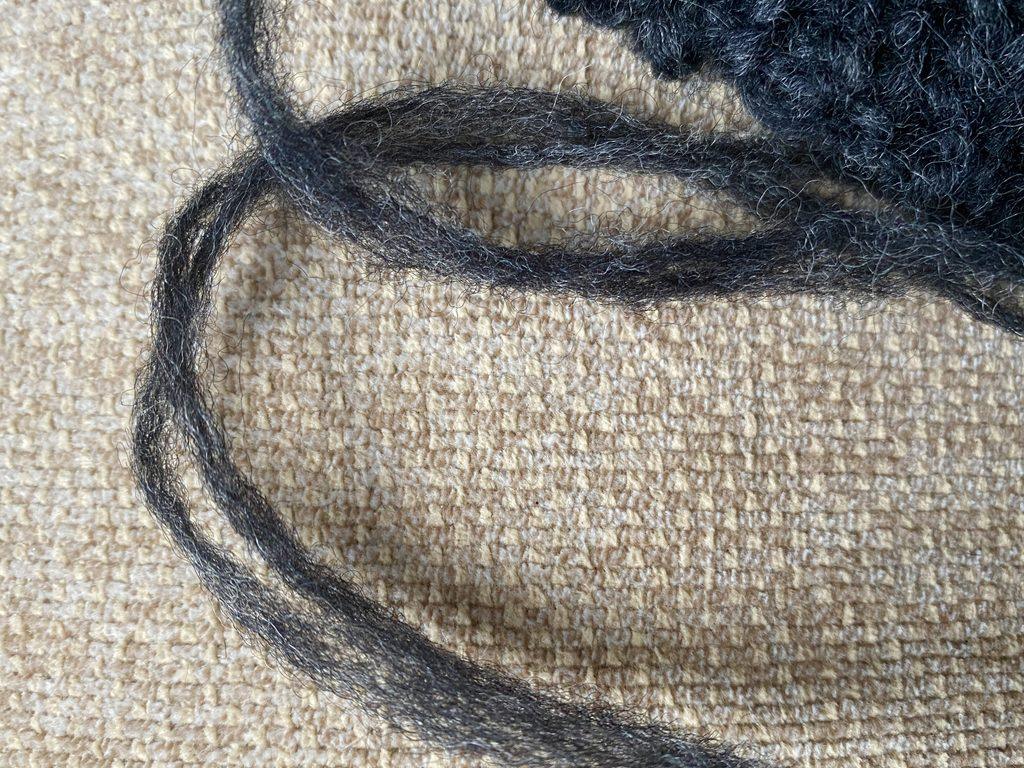
Breathe in, breathe out, ground yourself, feel the yarn between your fingers, let your wrists soften, rub your fingers and palms gently, and hold your needles as though they were made of fine china. That, at least, is what worked for me.
Yes, the yarn sometimes snaps if you so much as look at it wrong, but the more I knit with it, the less often that happens. The nice part is that there’s no need for knots — you just take the two broken ends, dampen them slightly, roll them gently between your fingers, and — there — the thread is whole again. My biggest source of stress was when a break happened too close to the needle, but it turns out even that unravels easily; the yarn holds its shape remarkably well and the stitches stay clearly defined, so even close to the needles, you can undo a few loops without any trouble and rejoin it seamlessly.
My first attempt with Forgarn was “Shaun”, a sweater from a pattern by Isabel Kraemer. What I changed was the collar length — I wanted it much higher, and it ended up about 25 cm tall, and unlike her original pattern, I left out the supporting mohair thread. This project also gave me my first chance to try contiguous set-in sleeves (developed by Susie Myers). It’s an interesting technique, comfortable, and I like it because it sits closer to the body and makes it easy to layer a jacket on top.
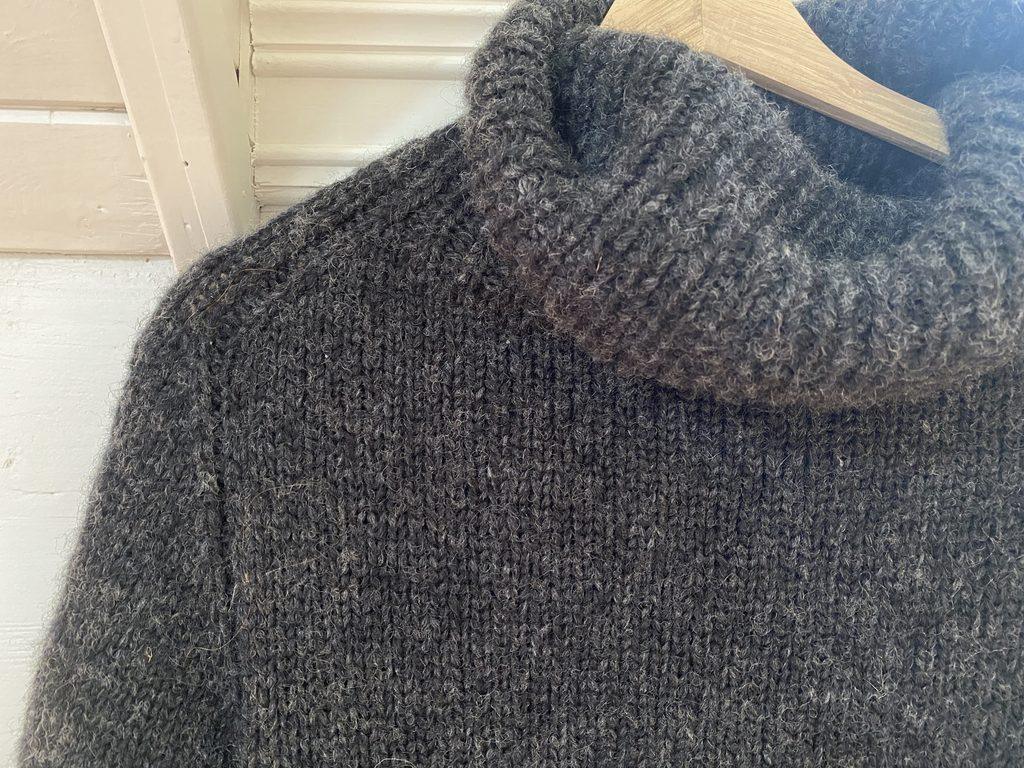
The other thing I loved, truly loved, was how the pattern itself was written. Oh, it’s wonderful — clear, well organized, with almost no room for error. That kind of thing is pure joy for my soul.
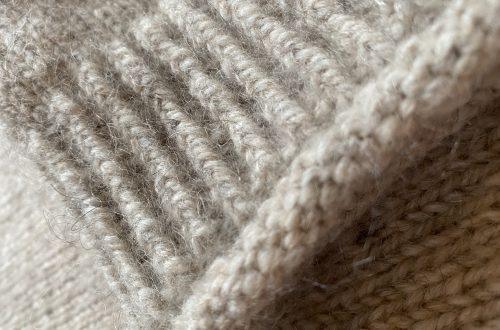
My sweater turned out wonderful — remarkably light, barely 400 grams even with that very tall collar and slightly long sleeves, and yet beautifully warm. Here I want to mention what I think is the greatest strength of this type of yarn: it’s extraordinarily warm for its weight, thanks to the little air pockets that form within it. The unspun strand itself is full of air, and after washing and blocking, the yarn settles, filling the gaps between stitches, and because it isn’t twisted, that air stays trapped inside the garment — creating insulation and helping regulate body temperature. It won’t stand up to wind, especially not our island’s Atlantic gusts, but the beauty of it is that it’s so light that with just a shell layer for wind and rain on top, you have a wonderfully warm sweater underneath.
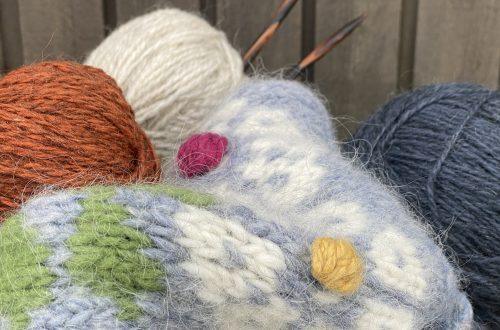
I bought four balls of Forgarn, 200 grams each, with an average of 380 meters per ball — though that length is measured for the doubled strand, since it comes wound double and that’s how you actually knit with it. My sweater took two balls and maybe another 20 meters from a third. Now, since I clearly can’t just own yarn and look at it, I’ve started something else with the leftovers, and when it’s finished I’ll be curious myself to see how it turns out, because I’m mixing two completely different yarns — one unspun, the other a blend of wool, merino, and mohair.
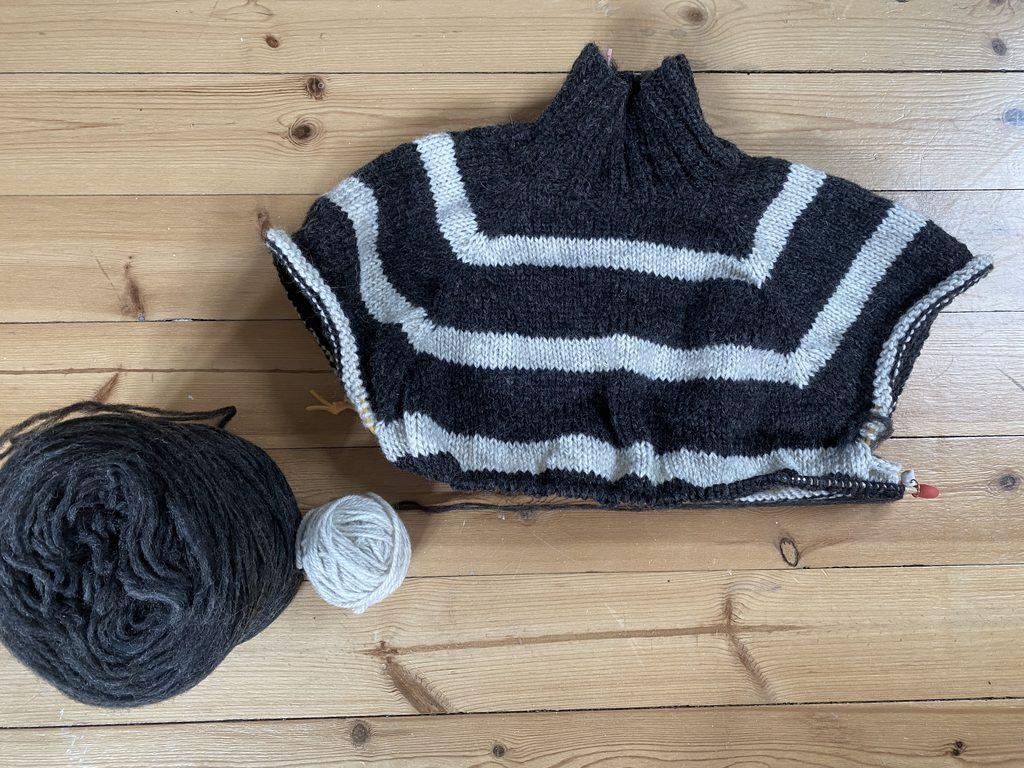
I can’t wait to tell you about that sweater too, once it’s done.